Protests in Nigeria After Mobil Spills 600,000 Barrels of Oil

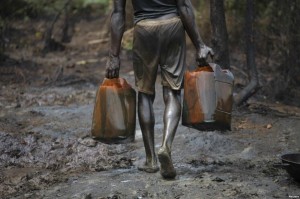
oil_theft_7-300x1991st July Youths in Eket and Esit Eket in Akwa Ibom on Mon­day staged peace­ful protests against fresh oil spills in Nkpana com­mu­ni­ty from a Mobil facil­i­ty i

oil_theft_7-300x1991st July Youths in Eket and Esit Eket in Akwa Ibom on Mon­day staged peace­ful protests against fresh oil spills in Nkpana com­mu­ni­ty from a Mobil facil­i­ty in Ibeno.

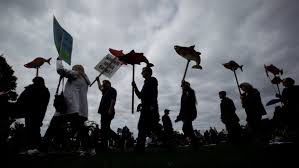
The youths num­ber­ing more than 500 protest­ed on major streets in Eket, includ­ing the Mari­na and Ter­mi­nal roads.

The pro­test­ers, under the ages of Core Youth Forum, car­ried plac­ards with inscrip­tions: “Oil spill is killing our aquat­ic life’’, “No com­pen­sa­tion for oil spill” and “Enough of this oil spillage,’’ among oth­ers.

Mr God­win Peter, the spokesman of the pro­test­ers, said the spill occurred on Sat­ur­day and occu­pied com­mu­ni­ties along the spill line on Sun­day.

He said the spill had dev­as­tat­ed aquat­ic life and destroyed fish­ing equip­ment, among oth­ers.
Peter appealed to Mobil to urgent­ly clean up the envi­ron­ment.

The youths threat­ened to dis­rupt Mobil activ­i­ties if their demands, which includ­ed imme­di­ate clean up and com­pen­sa­tion, were not met.

Also react­ing, Mr Inyang Ekong, the Sec­re­tary of the Arti­sanal Fish­er­men Asso­ci­a­tion of Nige­ria, Akwa Ibom Branch, not­ed that fish­ing had been sus­pend­ed in the area as a result of the spill.

He said that fish would be scarce in the state and appealed to Mobil to replace its old pipes to fore­stall fur­ther occur­rence.

Ekong said the spill would cause untold hard­ships to the peo­ple of Ibeno.

When con­tact­ed, Mr Akaninyene Esiere, the Man­ag­er of Pub­lic and Gov­ern­ment Affairs at the Qua Iboe Ter­mi­nal of Mobil, con­firmed the inci­dent.

“We have con­firmed a liq­uid release from our Qua Iboe ter­mi­nal on Sun­day, June 29, fol­low­ing seri­ous weath­er con­di­tions and light­ning strikes over the area at the week­end. We have acti­vat­ed our emer­gency response sys­tems to con­tain the release. All rel­e­vant reg­u­la­to­ry author­i­ties and com­mu­ni­ty lead­ers have been notified.We will con­tin­ue to work with the com­mu­ni­ty to allow progress in the effort by Mobil to con­tain the spill,’’ he said.

Esiere said that Mobil was com­mit­ted to safe envi­ron­ment dur­ing its oper­a­tions.

Earth First! Summer Gathering 2014 — exact location & other practicalities added

Updates: Exact loca­tion has been releas­es — see here

Trav­el - book your trav­el to Cas­tle Cary or Bru­ton train sta­tion, then it’s a bus jour­ney and 20 minute walk.

Updates: Exact loca­tion has been releas­es — see here

Trav­el - book your trav­el to Cas­tle Cary or Bru­ton train sta­tion, then it’s a bus jour­ney and 20 minute walk.

Bus times are : 8.14am — 9.44am — 11.44am — 12.33pm — 2.14pm — 4.33pm (last bus).  There’s no Sun­day ser­vice so we will timetable a shut­tle bus to return.

Cycling: Bru­ton is bet­ter if you are cycling as it is a mile short­er, and there is also a bus from there too. The last bus from here leaves lat­er.  (Bus times from Bru­ton are: 9:09am — 10:39am — 12:12pm — 1:39pm — 3:54pm — 5:39pm)

We will post the exact address three weeks before the gath­er­ing.

Refresh­ments — ‘This year there is no bar on site. Peo­ple are wel­come to bring their own but we ask that there’s no drink­ing before dinner/7pm. Any­one caus­ing a nui­sance or break­ing our Safer Spaces pol­i­cy will be asked to stop and/or leave. There will be a cafe & snack bar on site.’

Dogs — ‘This year dogs are wel­come, but please get in touch in advance, and keep them on a lead at all times on the site.’  Fur­ther info

—————-

28th-31st August 2014, in the South West.…

A place for peo­ple involved in rad­i­cal green direct action to come togeth­er.…
to talk.…share skills.…learn.…listen.…play.…rant.… find out whats going on.…
scheme.…live outdoors.…hang out.…laugh.…
expe­ri­ence non hier­ar­chi­cal, low impact, fam­i­ly friend­ly liv­ing.

An activist camp that spans 5 days and con­sists of a pro­gramme of work­shops through­out each day facil­i­tat­ed by peo­ple like you and me who think they have a skill or a lev­el of knowl­edge in a sub­ject that is valu­able to share with oth­ers to improve their activism.

Is this camp for you?  Whether you’re just start­ing out in the world of direct action or you’re an old (glued and paint-stained) hand at it, you’re wel­come here.

More info here

Action dates & gatherings now working again!

The action dates and protest gath­er­ings page is once again work­ing!  Apolo­gies, we acci­den­tal­ly delet­ed it!

If there’s any eco­log­i­cal actions that are open­ly adver­tised, protest camps or cam­paign gath­er­ings, that you want to add to it, do it through the sub­mit report link and in the sub­ject, make it clear it’s to add to the cal­en­dar.  Thanks.

The action dates and protest gath­er­ings page is once again work­ing!  Apolo­gies, we acci­den­tal­ly delet­ed it!

If there’s any eco­log­i­cal actions that are open­ly adver­tised, protest camps or cam­paign gath­er­ings, that you want to add to it, do it through the sub­mit report link and in the sub­ject, make it clear it’s to add to the cal­en­dar.  Thanks.

Climate Activists Blockade Oil Terminal, Demand Halt to Crude-by-Rail Traffic in Pacific Northwest

10501739_771642884850_4820811503256859328_n 30th June This morn­ing, cli­mate jus­tice activists with Port­land Ris­ing Tide shut down the ArcLo­gist

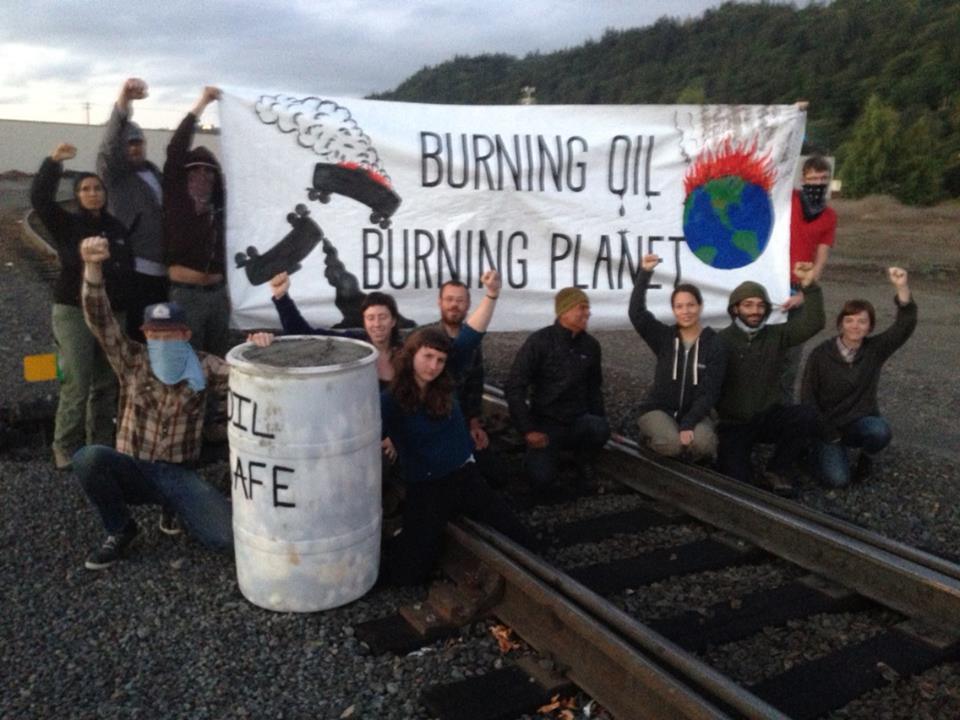
10501739_771642884850_4820811503256859328_n 30th June This morn­ing, cli­mate jus­tice activists with Port­land Ris­ing Tide shut down the ArcLo­gis­tics crude oil ter­mi­nal in North­west Port­land.
Port­land res­i­dent Irene Majorie, 22, locked her­self to a 55-gal­lon bar­rel filled with con­crete that was placed on the rail­road track lead­ing into the facil­i­ty.

Train cars enter from a near­by yard to offload oil into 84 stor­age tanks, before it is piped onto ocean­go­ing ships bound for West Coast refiner­ies. Majorie’s arm was locked to a piece of met­al rebar embed­ded in the con­crete, stop­ping trains for four hours before being cut out by police.

Attempts by law enforce­ment to move her and the bar­rel simul­ta­ne­ous­ly risked grave injury; like­wise, any train traf­fic threat­ened her life.

“This is about stop­ping the oil trains,” said Majorie. “But beyond that, it is about an indus­try and an eco­nom­ic sys­tem that places the pur­suit of prof­it before the lives and rela­tion­ships of human beings seek­ing sur­vival and nour­ish­ment, and before the com­mu­ni­ties, ecosys­tems, and plan­et of which we are a part.”

Oil trains are com­ing under increas­ing scruti­ny recent­ly owing to their propen­si­ty to derail in fiery explo­sions. Port­land Ris­ing Tide, how­ev­er, dis­putes the notion that an oil train is ever safe, since crude oil is only trans­port­ed to be burned. What­ev­er the risk of explo­sion, the guar­an­teed result is a wors­en­ing of the cli­mate cri­sis, which is already wreak­ing eco­log­i­cal hav­oc and claim­ing human lives.

10435835_754308524591923_4842444232067517220_n

US crude oil pro­duc­tion has risen from ~5 mil­lion bar­rels per day in the late 2000s to ~7 mil­lion bar­rels per day cur­rent­ly. Increased extrac­tion is North Dakota’s Bakken Shale has result­ed in a dra­mat­ic rise in oil train traf­fic, with 250 per­cent more oil trains trav­el­ing Ore­gon rail lines in 2013 than in the pre­vi­ous year.

Gov­er­nor Kitzhaber has expressed “deep con­cern” about oil trains but thus far done noth­ing to stop them. “Soci­ety should be engaged in a rapid, rad­i­cal decline in fos­sil fuel use,” said David Ben­nett. “Instead, policymakers—even those who claim to under­stand the mag­ni­tude of the cli­mate crisis—are forc­ing us to engage in an absurd con­ver­sa­tion about cre­at­ing ‘safe’ oil trains and build­ing more fos­sil fuel infra­struc­ture.”

The ArcLo­gis­tics ter­mi­nal, which began oper­a­tion in Jan­u­ary, is one piece of infra­struc­ture facil­i­tat­ing increased oil pro­duc­tion. When ongo­ing con­struc­tion is com­plet­ed, the facil­i­ty will have the capac­i­ty to trans­port 16,250 bar­rels of oil per day.

In April, Port­land Ris­ing Tide entered the Ore­gon Depart­ment of Envi­ron­men­tal Quality’s offices in down­town Port­land, issued ter­mi­na­tion let­ters to employ­ees at their desks, and announced the for­ma­tion of a new People’s Agency, which would car­ry out DEQ’s man­date free of cor­po­rate influ­ence. This is the first enforce­ment action of the nascent agency.

“If our pol­i­cy­mak­ers lis­tened, we would demand an imme­di­ate halt to oil train traf­fic in Ore­gon and the clo­sure of all crude oil ter­mi­nals,” said Emma Gould. “Since they don’t, we’re halt­ing oil trains our­selves.” High res­o­lu­tion pho­tos are avail­able for down­load and may be used with attri­bu­tion

Today’s action saw activists from across the con­ti­nent join­ing togeth­er to say no to oil trains, show­ing that oil trains are an inter­na­tion­al issue of con­cern for peo­ple and non­hu­man ani­mals every­where.

Enbridge Pipeline Road Blocked by Protesters in Burlington

index

20th May 2014. A group of pro­test­ers has block­ad­ed the road to an exposed sec­tion of Enbridge’s Line 9 pipeline ear­ly this morn­ing in Burling­ton, Ont.

index

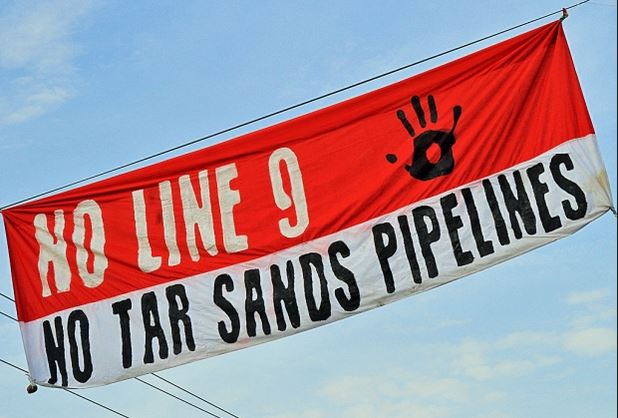
20th May 2014. A group of pro­test­ers has block­ad­ed the road to an exposed sec­tion of Enbridge’s Line 9 pipeline ear­ly this morn­ing in Burling­ton, Ont.

The pro­test­ers say they plan to con­tin­ue the block­ade for at least 12 hours.

A news release says the 12-hour stay rep­re­sents 12,000 “anom­alies Enbridge has report­ed to exist on the line.”


“Enbridge calls these devel­op­ments integri­ty digs,” said Danielle Boissineau, one of the pro­test­ers, “but to any­one watch­ing the Line 9 issue, it’s clear Enbridge has no integri­ty. This work on the line is just a Band-Aid, a flim­sy patch over the most out­ra­geous flaws in the Line 9 plan.

“Line 9 has a lot of sim­i­lar­i­ties to Line 6B that erupt­ed in the Kala­ma­zoo Riv­er. The risk is just not worth it,” she said.

From July to Decem­ber of last year, there were 308 main­te­nance digs along Line 9 — and the vast major­i­ty were for cracks in the line. In July alone, Enbridge filed 105 main­te­nance notices for digs on the line, accord­ing to doc­u­ments filed with the Nation­al Ener­gy Board.

The group says its mem­bers include res­i­dents of Burling­ton who don’t want the pipeline run­ning through their city.

“Line 9 has near­ly 13,000 struc­tur­al weak­ness­es along its length” said Bri­an Suther­land, a Burling­ton res­i­dent. “And yet Enbridge is only doing a few hun­dred integri­ty digs.”

There were about 20 pro­test­ers at the site ear­ly Tues­day. As of 8:15 a.m., no police had arrived.

Last June, a group of pro­test­ers shut down con­struc­tion at an Enbridge pump sta­tion in rur­al Hamil­ton.

About 80 peo­ple inter­rupt­ed con­struc­tion at the North West­over site.

In March, the NEB approved a request from Enbridge to reverse the flow and increase the capac­i­ty of the con­tro­ver­sial Line 9 pipeline that has been run­ning between south­ern Ontario and Mon­tre­al for years.

Line 9 orig­i­nal­ly shut­tled oil from Sar­nia, Ont., to Mon­tre­al, but was reversed in the late 1990s in response to mar­ket con­di­tions to pump import­ed crude west­ward. Enbridge now wants to flow oil back east­wards to ser­vice refiner­ies in Ontario and Que­bec.

It plans to move 300,000 bar­rels of crude oil per day through the line, a rise from the cur­rent 240,000 bar­rels, with no increase in pres­sure.

Oppo­nents argue the Line 9 plan puts com­mu­ni­ties at risk, threat­ens water sup­plies and could endan­ger vul­ner­a­ble species in eco­log­i­cal­ly sen­si­tive areas.

Breaking: Blockade Launched Against Enbridge Line 9 Pipeline

Photo: CBC20th May 2014. A group of area res­i­dents have block­ad­ed the access road to an exposed sec­tion of Enbridge’s Line 9 pipeline, begin­ning at 7am this morn­ing.

Photo: CBC20th May 2014. A group of area res­i­dents have block­ad­ed the access road to an exposed sec­tion of Enbridge’s Line 9 pipeline, begin­ning at 7am this morn­ing. They say they will stay for at least twelve hours, one hour for every thou­sand anom­alies Enbridge has report­ed to exist on the line. These com­mu­ni­ty mem­bers turned away Enbridge employ­ees who were sched­uled to do work on Line 9 in prepa­ra­tion for it to car­ry tox­ic dilut­ed bitu­men from the Alber­ta Tar Sands. This par­tic­u­lar work site is adja­cent to the Bronte creek, a major water­way flow­ing to Lake Ontario, the water source for more than ten mil­lion peo­ple.

“Enbridge calls these devel­op­ments integri­ty digs,” said Danielle Boissineau, one of the block­aders, “but to any­one watch­ing the Line 9 issue, it’s clear Enbridge has no integri­ty. This work on the line is just a band-aid, a flim­sy patch over the most out­ra­geous flaws in the Line 9 plan.” [Danielle notes that a record of just some of Enbridge’s false or mis­lead­ing state­ments is avail­able on the Enbridge Lies face­book page

“Line 9 has near­ly 13,000 struc­tur­al weak­ness­es along its length” said Bri­an Suther­land, a Burling­ton res­i­dent. “And yet Enbridge is only doing a few hun­dred integri­ty digs. Enbridge has been deny­ing the prob­lems with the pipe for years, and they still refuse to do the hydro­sta­t­ic test­ing request­ed by the province. Are we real­ly sup­posed to trust Enbridge when they tell us that this time they’ll do it right?”


Many of the block­aders point to the dis­as­trous spill from Enbridge’s line 6b into the Kala­ma­zoo Riv­er in Michi­gan in 2010, where mil­lions of litres of oil spilled and have so far proven impos­si­ble to clean up. But many of them empha­size that their oppo­si­tion to Line 9 goes beyond safe­ty con­cerns.

“This is not about pipelines ver­sus rail; it’s about the Tar Sands,” said Danielle Boissineau. “It’s the dirt­i­est oil in the world: it’s not worth the destruc­tion it takes to pro­duce, it’s not worth the risk to our water­sheds to trans­port, and we def­i­nite­ly can’t afford the car­bon in our atmos­phere when it’s burned. At every step of the process, the Tar Sands out­sources the risks onto our com­mu­ni­ties and poi­sons water­ways like the Athabas­ca Riv­er and the Bronte creek while com­pa­nies like Enbridge get rich.”

Call for Solidarity Actions Against Oil Trains

oil trains 19th May 2014. Maine Earth First!/350 Maine call for Sol­i­dar­i­ty Actions Sur­round­ing Supe­ri­or Court Hear­ing in Fracked Bakken Crude Oil Train Case
oil trains 19th May 2014. Maine Earth First!/350 Maine call for Sol­i­dar­i­ty Actions Sur­round­ing Supe­ri­or Court Hear­ing in Fracked Bakken Crude Oil Train Case

On May 22nd two of three peo­ple who block­ad­ed rail­road tracks in Auburn last August, Doug Bowen and Jessie Dowl­ing of Maine Earth First!, will have a hear­ing at the Androscog­gin Coun­ty Supe­ri­or Court.

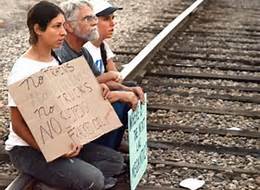
Last August, mem­bers of 350Maine and Maine Earth First! con­duct­ed a sit-in on the Pan Am rail­road tracks in the cen­ter of Auburn to call atten­tion to the ongo­ing dan­gers posed by the trans­porta­tion of Bakken crude oil by rail.

This was 7 weeks after a train­load of the same oil explod­ed in Lac Megan­tic, killing 47. Doug Bowen and Jessie Dowl­ing will face charges for this direct action and will present evi­dence for a com­pet­ing harms defense – that com­mit­ting a small­er harm was meant to pre­vent a larg­er one.

There have been at least 6 oth­er major train derail­ments involv­ing Bakken crude oil since Lac-Megan­tic. This train block­ade was one of two block­ades Maine Earth First! And 350 Maine took part in last sum­mer.

Trains run­ning through Maine car­ry crude from the Bakken oil fields of North Dako­ta, where it is “fracked” or extract­ed by blast­ing a high pres­sure tox­ic cock­tail deep into the ground to release oil from shale rock, pol­lut­ing air and water in sur­round­ing com­mu­ni­ties.

With hydraulic frac­tur­ing or “frack­ing” tech­nol­o­gy, oil that has long been impos­si­ble to extract is now the source of an explo­sive oil boom in the Mid­west. With­out enough pipelines to trans­port the Mid­west crude to dis­tant refiner­ies, there has been a surge in the use of trains. Inspec­tions of tracks are infre­quent due to lack of resources to over­see them and a lack of con­cern for local com­mu­ni­ties by giant corporations/government.

Maine  EF!er being arrested after blockade

There have been many train derail­ments through-out the con­ti­nent over the last year and a half oth­er than Lac Megan­tic, includ­ing a 106-car-long oil train in Cas­sel­ton, North Dako­ta which caused sev­en oil cars to explode and also caused an evac­u­a­tion of 2,400 peo­ple, A CN freight train car­ry­ing crude oil in New Brunswick in Jan­u­ary,

A 120-car Nor­folk South­ern train car­ry­ing heavy Cana­di­an crude oil which derailed and spilled in west­ern Penn­syl­va­nia also in Jan­u­ary, and a CSX train that explod­ed in Lynch­burg, Vir­ginia car­ry­ing Bakken Crude Oil on May first, only to name a few.

In Jan­u­ary the U.S. Depart­ment of Transportation’s Pipeline and Haz­ardous Mate­ri­als Safe­ty Admin­is­tra­tion issued a Safe­ty Alert con­clud­ing Bakken crude is more flam­ma­ble than heav­ier oils. Hence the term “bomb trains.”

We are ask­ing indi­vid­u­als and groups to take part in a day of action to bring atten­tion to fracked oil, frack­ing in gen­er­al (if you can tie in into your cam­paigns), unsafe trains car­ry­ing fos­sil fuels (Bakken Crude or oth­er­wise), and/or any oth­er con­nec­tions you can make in your com­mu­ni­ty.

Pos­si­ble tar­gets: Irv­ing Oil, a cor­po­ra­tion that receives oil from the Bakken Crude fields, and the cor­po­ra­tion that was sup­posed to be the recip­i­ent of the oil that explod­ed in Lac Mac­gan­tic Cor­po­ra­tions involved in frack­ing in the North Dako­ta Bakken Shale: http://www.ugcenter.com/operators/Bakken/all Cen­tral Maine and Que­bec Rail­road if you are in Maine (or join us at the cour­t­house!) Places in your com­mu­ni­ty where trains are rolling through with crude oil or oth­er dan­ger­ous extreme ener­gy sub­stances.

Here is an exam­ple in Mon­tana: http://earthfirstjournal.org/newswire/2014/04/13/seven-arrests-in-montana-coal-train-protest/

Ports that are an end point of dan­ger­ous trains. Here is one exam­ple in Wash­ing­ton: http://earthfirstjournal.org/newswire/2014/02/15/crude-oil-terminal-planned-in-nw-portland/

Please keep us updat­ed on any sol­i­dar­i­ty actions you take!

For more infor­ma­tion, inter­views, or to tell us about your action con­tact Chris­tine: blackbean@riseup.net, or 207.505.5114

Nembe Communities Occupy Shell Oil Facilities in Nigeria

Shell's environmental destruction of southern Nigeria is internationally condemned 12th May 2014

Shell's environmental destruction of southern Nigeria is internationally condemned 12th May 2014

Stake­hold­ers and indi­genes of Nem­be-Bas­sam­biri in Bayel­sa State last week­end besieged oil facil­i­ties oper­at­ed by the Shell Petro­le­um Devel­op­ment Com­pa­ny (SPDC) over it’s divest­ment plans and pro­posed sale of its Oil Min­ing Licens­es (OMLs).

The host to some of the SPDC’s instal­la­tions in Nem­be Local Gov­ern­ment Area of the state, were angry at the plan by Shell to sell OML 29 locat­ed in their domain with­out con­sult­ing them.

Shell has report­ed­ly placed its 45 per­cent stake in four oil wells includ­ing OML 29 for sale as part of the company’s divest­ment.

OML 29 is believed to have increased to 62,000 bpd of oil and 40 mil­lion stan­dard cubic feet of gas per day (mmscf/d). It also holds reserves of 2.2 bil­lion bar­rels of oil equiv­a­lent (boe).

The aggriev­ed pro­test­ers who stormed the company’s facil­i­ties on Sat­ur­day with diffrent  plac­ards asked Shell to stop pro­duc­tion for three days to address their demands.

Num­ber­ing over 100, the demon­stra­tors con­sist­ing of women, youths, chiefs, lead­ers and elders from the com­mu­ni­ty came on 15 speed­boats.

The pro­test­ers led by a mem­ber of the community’s Oil and Gas Com­mit­tee, Chief Brigi­di, took over the Nem­be-Brass water­ways, chant­i­ng sol­i­dar­i­ty songs as they sailed to SPDC’s major oil plat­forms in the area to reg­is­ter their griev­ances.

Some of the plac­ards dis­played by the pro­test­ers read: “the land is ours, the oil is ours, Shell can­not divest with­out us”;  “No, to Shell OML 29 sale”; “After pol­lut­ing our land and water, Shell wants to sell our land”.

Oth­ers are “No to fraud­u­lent sell of invest­ment”. “No to Shell fraud­u­lent divest­ment”;  “OML 29, OPU Nem­be demand jus­tice”; “Do not sell our oil wells to strangers” and “Include our com­pa­nies in OML divest­ment plans”.

A mem­ber of the Nem­be-Bas­sam­biri Coun­cil of Chiefs, Chief Bukunor Alfred, said mem­bers of the com­mu­ni­ty were angry at the plan of SPDC to sell oil blocks in the area with­out con­sult­ing them.

He said del­e­gates sent by the coun­cil of chiefs to dia­logue with SPDC on the devel­op­ment returned dis­ap­point­ed, say­ing, “Our plac­ards have shown that we are not hap­py with Shell. We are by this protest giv­ing Shell three days to shut down oper­a­tion and dia­logue with us or we will ensure that these facil­i­ties are per­ma­nent­ly closed.”

He said though SPDC had con­tributed in the devel­op­ment of the com­mu­ni­ty, the com­pa­ny was wrong to take a major deci­sion of divest­ing with­out con­sult­ing its land­lords.

“We are not against what they are doing. But we want to say that we are the land­lords and we are sup­posed to be noti­fied on what our ten­ants are doing,” he said.

Also, the Chair­man of Opu-Nem­be Improve­ment Union (ONIU), Mr. Ebinyo Robert, said the com­mu­ni­ty would not let the com­pa­ny to leave uncer­e­mo­ni­ous­ly after destroy­ing its envi­ron­ment through pol­lu­tion.

He insist­ed that the com­pa­ny must involve the com­mu­ni­ty in all the process­es involved in sell­ing OML 29.

He warned that indi­vid­u­als and com­pa­nies indi­cat­ing inter­est to buy the oil wells should desist or have the com­mu­ni­ty to con­tend with.

He said the com­mu­ni­ties have nom­i­nat­ed three com­pa­nies, Amot Oil E&P Lim­it­ed, A‑Abas Resources and Isea BMG, to par­tic­i­pate in the bid­ding process.

He said: “The place has been pol­lut­ed and our envi­ro­ment, our water our land, has been degrad­ed for a long time. We have not been reha­bil­i­tat­ed the way we real­ly want­ed it.

“By this demon­stra­tion, we are telling the par­ties to the sale includ­ing the bid­ders to desist from going ahead because if they do, of course, the land is ours, the water is ours and the oil is ours, they will have us to con­tend with and they may not like us in the man­ner in which they will meet us when they come to oper­ate.

“So, we are ask­ing the SPDC to stop the flow and all oper­a­tions for now and ensure that the com­mu­ni­ty is car­ried along because that is the only way we can have peace here.

“We are also say­ing that the com­mu­ni­ty has nom­i­nat­ed three com­pa­nies, Amot Oil E&P Lim­it­ed, A‑Abas Resources and Isea BMG, to par­tic­i­pate in the bid­ding process. So, SPDC should involve these com­pa­nies in the process.”

But the Oper­a­tions Team Lead San­ta Bar­bara Flow Sta­tion, Mr. Akpe Emmanuel, wel­comed the pro­test­ers on behalf of Shell.

He thanked them for the peace­ful man­ner in which they con­duct­ed the demon­stra­tion and promised to pass their griev­ances across the SPDC.

He said: “Once again, you are wel­come. I want to thank you for the man­ner in which you pre­sent­ed your case. I real­ly appre­ci­ate it on behalf of Shell.

“Like the com­mu­ni­ty has assigned you to rep­re­sent them, I am also here on behalf of Shell. I have heard all you have said. It is my duty to pass this mes­sage to my prin­ci­pal.”

Nearly a thousand environmental activists murdered since 2002

April 15, 2014  At least 908 peo­ple were mur­dered for tak­ing a stand to defend the envi­ron­ment betwe

April 15, 2014  At least 908 peo­ple were mur­dered for tak­ing a stand to defend the envi­ron­ment between 2002 and 2013, accord­ing to a new report today from Glob­al Wit­ness, which shows a dra­mat­ic uptick in the mur­der rate dur­ing the past four years. Notably, the report appears on the same day that anoth­er NGO, Sur­vival Inter­na­tion­al, released a video of a gun­man ter­ror­iz­ing a Guarani indige­nous com­mu­ni­ty in Brazil, which has recent­ly reset­tled on land tak­en from them by ranch­ers decades ago. Accord­ing to the report, near­ly half of the mur­ders over the last decade occurred in Brazil—448 in all—and over two-thirds—661—involved land con­flict.

“There can be few stark­er or more obvi­ous symp­toms of the glob­al envi­ron­men­tal cri­sis than a dra­mat­ic upturn in killings of ordi­nary peo­ple defend­ing rights to their land or envi­ron­ment,” said Oliv­er Court­ney of Glob­al Wit­ness. “Yet this rapid­ly wors­en­ing prob­lem is going large­ly unno­ticed, and those respon­si­ble almost always get away with it. We hope our find­ings will act as the wake-up call that nation­al gov­ern­ments and the inter­na­tion­al com­mu­ni­ty clear­ly need.”

But as gris­ly as the report is, it’s like­ly a major under­es­ti­ma­tion of the issue. The report cov­ers just 35 coun­tries where vio­lence against envi­ron­men­tal activists remains an issue, but leaves out a num­ber of major coun­tries where envi­ron­men­tal-relat­ed mur­ders are like­ly occur­ring but with scant report­ing.

“Because of the live, under-rec­og­nized nature of this prob­lem, an exhaus­tive glob­al analy­sis of the sit­u­a­tion is not pos­si­ble,” reads the report. “For exam­ple, African coun­tries such as Nige­ria, Demo­c­ra­t­ic Repub­lic of Con­go, Cen­tral African Repub­lic and Zim­bab­we that are endur­ing resource-fueled unrest are high­ly like­ly to be affect­ed, but infor­ma­tion is almost impos­si­ble to gain with­out detailed field inves­ti­ga­tions.”

In fact, reports of hun­dreds of addi­tion­al killings in coun­tries like Ethiopia, Myan­mar, Venezuela, and Zim­bab­we were left out due to lack of rig­or­ous infor­ma­tion.

Even with­out these coun­tries includ­ed, the num­ber of envi­ron­men­tal activists killed near­ly approach­es the num­ber of jour­nal­ists mur­dered dur­ing the same period—913—an issue that gets much more press. Envi­ron­men­tal activists most at risk are peo­ple fight­ing spe­cif­ic indus­tries.

“Many of those fac­ing threats are ordi­nary peo­ple oppos­ing land grabs, min­ing oper­a­tions and the indus­tri­al tim­ber trade, often forced from their homes and severe­ly threat­ened by envi­ron­men­tal dev­as­ta­tion,” reads the report. “Indige­nous com­mu­ni­ties are par­tic­u­lar­ly hard hit. In many cas­es, their land rights are not rec­og­nized by law or in prac­tice, leav­ing them open to exploita­tion by pow­er­ful eco­nom­ic inter­ests who brand them as ‘anti-devel­op­ment’.”

As if to high­light these points, Sur­vival Inter­na­tion­al released a video today that the groups says shows a gun­man fir­ing at the Pyeli­to Kuê com­mu­ni­ty of Guarani indige­nous peo­ple. The inci­dent injured one woman, accord­ing to the group. The Guarani have been cam­paign­ing for decades to have land returned to them that has been tak­en by ranch­ers.

“This video gives a brief glimpse of what the Guarani endure month after month—harassment, intim­i­da­tion, and some­times mur­der, just for try­ing to live in peace on tiny frac­tions of the ances­tral land that was once stolen from them,” the direc­tor of Sur­vival Inter­na­tion­al, Stephen Cor­ry, said. “Is it too much to expect the Brazil­ian author­i­ties, giv­en the bil­lions they’re spend­ing on the World Cup, to sort this prob­lem out once and for all, rather than let the Indi­ans’ mis­ery con­tin­ue?”

Accord­ing to the report, two major dri­vers of repeat­ed vio­lence against envi­ron­men­tal activists are a lack of atten­tion to the issue and wide­spread impuni­ty for per­pe­tra­tors. In fact, Glob­al Wit­ness found that only ten peo­ple have been con­vict­ed for the 908 mur­ders doc­u­ment­ed in the report, mean­ing a con­vic­tion rate of just 1.1 per­cent to date.

“Envi­ron­men­tal human rights defend­ers work to ensure that we live in an envi­ron­ment that enables us to enjoy our basic rights, includ­ing rights to life and health,” John Knox, UN Inde­pen­dent Expert on Human Rights and the Envi­ron­ment said. “The inter­na­tion­al com­mu­ni­ty must do more to pro­tect them from the vio­lence and harass­ment they face as a result.”

BREAKING THE FRAME

A GATHERING ON THE POLITICS OF TECHNOLOGY

2nd — 5th May 2014

Unstone Grange, Der­byshire

YOU NEED TO BOOK ‑SEE BELOW

Organ­ised by Lud­dites 200, Cor­po­rate Watch, and Sci­en­tists for Glob­al Respon­si­bil­i­ty

A GATHERING ON THE POLITICS OF TECHNOLOGY

2nd — 5th May 2014

Unstone Grange, Der­byshire

YOU NEED TO BOOK ‑SEE BELOW

Organ­ised by Lud­dites 200, Cor­po­rate Watch, and Sci­en­tists for Glob­al Respon­si­bil­i­ty

Tech­nol­o­gy can bring some ben­e­fits for ordi­nary peo­ple, but its devel­op­ment is almost entire­ly con­mtrolled by cor­po­rate, mil­i­tary and tech­no­crat­ic elites, so it usu­al­ly serves their inter­ests and rein­forces their pow­er.

The pol­i­tics of food, ener­gy, work, gen­der, peace, eco­nom­ics, health, etc are all shaped by choic­es about tech­nol­o­gy made by those elites. The whole way our soci­ety devel­ops is mas­sive­ly influ­enced by tech­nol­o­gy, yet ordi­nary peo­ple nev­er have a prop­er say in it.  We’re always left react­ing to the tech­nocrats’ lat­est plan, whether it’s drones, inter­net sur­veil­lance, GM food, frack­ing, design­er babies or nuclear pow­er.

We think all these issues are linked. So it’s time for a more joined up and more proac­tive approach, one which address­es the root caus­es of prob­lems and is not lim­it­ed by the dog­ma that tech­nol­o­gy equals progress.

  • We want to cre­ate a new pol­i­tics of tech­nol­o­gy based on bring­ing togeth­er the insights of dif­fer­ent move­ments and learn­ing from each oth­er.
  • We want a human-scale tech­nol­o­gy that serves real human needs, not cor­po­rate bot­tom lines.
  • We want demo­c­ra­t­ic con­trol of tech­nol­o­gy.

An world fac­ing envi­ron­men­tal melt­down and mas­sive inequal­i­ty ‑both caused byb 200 years ofn indus­tri­al cap­i­tal­ism- needs bet­ter solu­tions than more dan­ger­ous tech­no-fix­es such as cli­mate engi­neer­ing.

Whether you’re a tech­nol­o­gy pol­i­tics cam­paign­er, trade union­ist, envi­ron­men­tal­ist. altech devel­op­er, artist or just plain con­cerned, BREAKING THE FRAME IS NOT TO BE MISSED.

YOU NEED TO BOOK

www.breakingtheframe.org.uk      

email: luddites200@yahoo.co.uk

(020) 7426 0005

Accom­mo­da­tion is either in the con­fer­ence cen­tre OR camp­ing (which is cheap­er).  The con­ces­sion­ary rate for camp­ing is £36, which includes all meals for 4 days (it’s a bank hol­i­day week­end).

BUT if £36 is more than you can man­age, we’re com­mit­ted to mak­ing sure nobody is left out for lack of mon­ey.  So get in touch now.  Rich peo­ple can make extra dona­tions, of course!