aSALT COURSE for NUTURUNG ACTIVISTS

In Sep­tem­ber a once a month activists nur­ture course starts, last­ing a year. The pur­pose is to become more effec­tive in our change work, sus­tain­ing it through inner joy and self-aware­ness

In Sep­tem­ber a once a month activists nur­ture course starts, last­ing a year. The pur­pose is to become more effec­tive in our change work, sus­tain­ing it through inner joy and self-aware­ness

the aSALT course (Spir­i­tu­al Activist Lead­er­ship Train­ing) val­ues under­ly­ing lov­ing con­nect­ed­ness and mean­ing beyond indi­vid­ual human life (spir­i­tu­al), activism in all its forms as effort to bring greater jus­tice into  the world, the lead­er­ship of all for all, train­ing as learn­ers and teach­ers togeth­er.

Our base will  be the Pales­tine muse­um in Bris­tol. We’ll have var­ied activ­i­ties includ­ing shared allot­ment work, shared food, body-work as we look  for a self-care/spir­i­tu­al prac­tice to sus­tain us, crit­i­cal think­ing, learn­ing about non­vi­o­lent the­o­ry and the grow­ing of social  change move­ments.

The course requires com­mit­ment and is designed to work along­side an exisit­ing engage­ment. There are things that won’t appeal to all: the phi­los­o­phy is def­i­nite­ly non­vi­o­lent (though not nec­es­sar­i­ly ‘legal’). The group will be diverse and include activists you dis­sagree with. There is a fee though there is also a bur­sary.

The course leader has not been a direct action activist often. He’s an active sup­port­er of Abol­ish Emp­ty Office Blocks, house peo­ple. He fell ill in Pales­tine as a human rights mon­i­tor (which part­ly inspired this course).He’s a men­tor and expe­ri­enced train­er

More details includ­ing con­tact details are on www.schumacherinstitute.org.uk/aSALT

4 Arsons against Bristol’s cellular transmission infrastructure over 24 Hours

Around Bris­tol between June 9th-10th, we left 7 mobile phone anten­nae in flames. Dai­ly con­tin­u­a­tion of cap­i­tal­ist soci­ety is depen­dent on unin­ter­rupt­ed flows (of goods, peo­ple, data, and ener­gy) and the com­mu­ni­ca­tions grid is no excep­tion.

Around Bris­tol between June 9th-10th, we left 7 mobile phone anten­nae in flames. Dai­ly con­tin­u­a­tion of cap­i­tal­ist soci­ety is depen­dent on unin­ter­rupt­ed flows (of goods, peo­ple, data, and ener­gy) and the com­mu­ni­ca­tions grid is no excep­tion. The lim­it­ed uses most of us can make from these flows only mask the way they are main­ly used to over­see and impose the dom­i­nant order, and increase its’ reach and con­trol. You need only look to how the val­ues of con­nec­tiv­i­ty, speed, and mobil­i­ty that are embod­ied in a mobile phone (for exam­ple) facil­i­tate a relent­less con­sumer cul­ture and the require­ment to be avail­able and flex­i­ble at all times: as much for the ben­e­fit of the boss and the adver­tis­er as for your fam­i­ly or friends. This is ful­ly con­sis­tent with the mod­ern restruc­tur­ing and decen­tral­i­sa­tion of the gigan­tic pro­duc­tive sys­tem which this soci­ety sub­jects us to. Hin­der­ing all this was our objec­tive.

2 anten­nae went up simul­ta­ne­ous­ly, in Ham­brook and out­side Ram Hill busi­ness park in Coal­pit Heath, both owned by O2. This is also not the first time O2 have been sin­gled out for dam­age acts because of the con­tracts they hold in the migrant deten­tion indus­try, with cops, and tag­ging for the pro­ba­tion ser­vice. Some hours lat­er a 3rd O2 anten­na went up in Coombe Din­gle, at the same time as a 4th fire was lit after gain­ing access to trans­mis­sion units con­nect­ed to the huge BT telecom­mu­ni­ca­tion tow­er in Lock­leaze. Sig­nals that will have been affect­ed are those of O2, T‑Mobile, Orange and Voda­phone. These cor­po­ra­tions var­i­ous­ly are con­nect­ed to the field of mil­i­tary equip­ment and arma­ment, use prison labour, and are famous for read­i­ly col­lab­o­rat­ing with elec­tron­ic polic­ing by the secret ser­vices (now that wide­spread data-sur­veil­lance is well known) while not even stop­ping at financ­ing Oxford uni­ver­si­ty with its’ exten­sive ani­mal exper­i­men­ta­tion labs. This has already led to their inter­ests being attacked in Berlin (T‑Mobile’s par­ent com­pa­ny*), Paris (Orange*), and Ban­bury (Voda­phone*).

For all above rea­sons it is always good to harm these cor­po­ra­tions, struc­tural­ly and eco­nom­i­cal­ly, and then there is the issue of the anten­nae them­selves radi­at­ing who knows how much harm­ful­ness to near­by species. There were the pub­li­cised cas­es in Bris­tol even some years ago of a woman in Shire­hamp­ton who com­plained of the affects of an anten­na put up on her high rise flat­block and lat­er died from a brain tumor, while an anten­na nick­named The Tow­er of Doom was with­drawn from Sta­ple Hill after can­cer rates soared. Evi­dence has mount­ed up that pro­longed use of mobile phones dam­ages the immune sys­tem, decreas­es fer­til­i­ty, and caus­es brain tumors and can­cers: espe­cial­ly in the young. We should men­tion that the anten­na we burned in Coombe Din­gle is one of three on the grounds of a uni­ver­si­ty sports pitch also mar­ket­ed for schools, as are many oth­ers. Addi­tion­al­ly, twist­ed lab tech­ni­cians claim to have deduced from exper­i­men­ta­tion on oth­er mam­mals (built on tor­ture like so much sci­en­tif­ic research) that expo­sure while still in the womb “sig­nif­i­cant­ly dam­ages brain func­tion, struc­ture and behav­iour and sug­gest­ed that these expo­sures could con­tribute to chil­dren’s behav­iour­al dis­or­ders”.

These prod­ucts were and still are pushed on us as harm­less, although near­ly every study that claims this was fund­ed by the indus­try itself, when we had no idea of the long term affects, sim­i­lar­ly to the mar­ket­ing of asbestos or smok­ing before they began to show their dead­ly toll (to use only 2 bet­ter known exam­ples among thou­sands). These days even researchers at Bris­tol uni­ver­si­ty con­cede the dan­gers of cel­lu­lar use. What a surprise.…the per­ma­nent­ly wired envi­ron­ment turns out to be tox­ic, while com­pa­nies make a killing in prof­its and the gov­ern­ment receives bil­lions in tax­es and licens­ing. For most peo­ple pro­longed con­tact with mobile phones or wire­less net­works in gen­er­al seems unavoid­able, for work or to avoid social mar­gin­al­i­sa­tion, in the street, on pub­lic trans­port, or at home: we are soak­ing in one more accu­mu­la­tive bar­rage in a poi­so­nous, anti-human and anti-life civil­i­sa­tion that grows by the day.

A recur­ring fea­ture of the estrange­ment that tech­nolo­gies such as mobile phones actu­al­ly cul­ti­vate between indi­vid­u­als, is how many addict­ed to their con­stant use now pre­fer to text mes­sage or to “tweet” to avoid the prospect of real life con­tact, and how many only feel safe com­mu­ni­cat­ing from behind a device. It is now com­plete­ly stan­dard for peo­ple to spend the major­i­ty of their wak­ing hours inter­fac­ing with one screen or anoth­er. Up and com­ing inven­tions such as Google Glass attempt to make this enclo­sure near total (although also depen­dent in part on unin­ter­rupt­ed trans­mis­sion infra­struc­ture). As a soci­ety that lives through high­ly com­plex tech­nolo­gies, we no longer ful­ly inhab­it our bod­ies and envi­ron­ment but instead some part of the tech­no-hive: and it is no longer only nerds and the young who prac­ti­cal­ly call this vir­tu­al real­i­ty their home. As the sphere dom­i­nat­ed by infor­ma­tion tech­nol­o­gy expands, what is con­sid­ered social­ly of impor­tance in our actu­al lives shrinks to what can be con­veyed and received by the device, and so nar­row­ing human emo­tion and expe­ri­ence. Or think about the obses­sive urge to treat mod­ern life as some­thing less to be lived than to be doc­u­ment­ed in each detail for pas­sive con­sump­tion on the “social” net­works, as anoth­er exam­ple of coloni­sa­tion by cap­i­tal­ism and its’ tech­nol­o­gy.

Plan­ning and car­ry­ing out your exis­tence dig­i­tal­ly also allows the pos­si­bil­i­ties of unprece­dent­ed sur­veil­lance, and it hin­ders active rebel­lion or even ques­tion­ing of the dom­i­nant order by flag­ging up “abnor­mal­i­ties” in what you often vol­un­tar­i­ly share with your friends or “Friends.” At the same time, con­cert­ed exploita­tion of the base pop­u­la­tions around the world and eco­log­i­cal pil­lage to the point of col­lapse con­tin­ues to fat­ten the same rich par­a­sites’ pock­ets, and tech­no­log­i­cal immer­sion helps peo­ple nei­ther relate nor care. On the con­trary mil­lions now hunger for their part in the way of life that is killing every­thing.

With an anar­chist per­spec­tive in search of free and ful­fill­ing exis­tence, we fight to do away with all tech­nolo­gies born from the tox­i­fi­ca­tion and slav­ery of mines, fac­to­ries, and indus­tri­al infra­struc­tures, and for our dai­ly com­mu­ni­ca­tion to be as unmedi­at­ed as pos­si­ble. Tak­ing down these few nodes was not enough for us, it is not a case of sim­ply aban­don­ing the uses of a par­tic­u­lar device alone, but it is eras­ing the whole social sys­tem which first trapped us in its’ “neces­si­ty” which is the chal­lenge. We found anten­nae an easy way to start: it is sim­ply a mat­ter of burn­ing tires between the exposed cables and away you go. In North Lanark­shire, Scot­tish vil­lagers even felled one. By reflect­ing on rad­i­cal and anti-indus­tri­al his­to­ry in Britain (such as the Swing and Lud­dite insur­rec­tions), as well as con­tem­po­rary anar­chist guer­ril­la prax­is, we can see the advan­tage of low-tech, cheap, and eas­i­ly repro­ducible tac­tics to wreck machin­ery that enclos­es and impov­er­ish­es us, on an even more inti­mate lev­el present­ly than ever before. These ubiq­ui­tous (and high­ly expen­sive) struc­tures are spread around every town or city and fur­ther indus­tri­al­is­ing the coun­try­side, where they are some­times paint­ed green in the attempt to cam­ou­flage them: and dis­gust­ing­ly even have bird and bat nest­ing box­es mount­ed on some. Their guardians can­not always be watch­ing them all so it is up to our inge­nu­ity to remain a step ahead and stretch their forces thin. This and every net­work has its’ weak points, in these cracks in the archi­tec­ture of con­trol that afford us lever­age: a destruc­tive capac­i­ty we are appro­pri­at­ing. As the promis­es of hyper-tech­ni­fied mod­ern cul­ture con­tin­ue to show their shal­low­ness, rebels will car­ry on act­ing against the nox­ious instal­la­tions and the way of life they feed.

“.…Resis­tance against the Tech­no­log­i­cal-Indus­tri­al Machine lives only through the path of lib­er­a­tion from every pow­er and order, runs towards an event hori­zon where noth­ing has been writ­ten yet.” ‑let­ter from Gian­lu­ca Iaco­v­ac­ci, from C.R. San Michele prison

Our attack is not sep­a­rate from over­all anar­chist sub­ver­sion by all means, which nat­u­ral­ly includes sol­i­dar­i­ty with our pris­on­ers in ene­my hands. A wild greet­ing from Bris­tol to Adri­ano Antonac­ci, no less than to his friend and com­rade Gian­lu­ca (FAI/IRF Sub­ver­sive Anti-Civil­i­sa­tion indi­vid­u­al­i­ty) whose brave lone acts in Rome he is also accused of. Hel­lo to the new anar­chist and anti-colo­nial groups in Hong Kong and Aus­tralia, and sol­i­dar­i­ty to the Paris ten accused of sab­o­tag­ing prison prof­i­teers.

Our attack came at a time when the net­works are already set to be over­loaded by the World Cup hys­te­ria, to show our com­plic­i­ty with the insur­gent fight­ers in Brazil as they answer mas­sive dis­pos­ses­sion and mil­i­tarised slum clear­ances for the opu­lence of the games with street bat­tles and arson. Because it should be remem­bered that the enthralling spec­ta­cle, that is staged to make the rich yet more mon­ey and to dis­tract us from our dai­ly humil­i­a­tions, is based on the State and Cap­i­tal’s vio­lence against resisters, the indige­nous, and the poor­est in Brazil­ian soci­ety.

Let’s not for­get Marie Mason and Eric McDavid: both are still behind bars after State repres­sion and entrap­ment which fol­lowed an ear­ly string of Earth Lib­er­a­tion Front strikes in the USA. Years lat­er the earth lib­er­a­tion strug­gle is not defeat­ed either in spir­it or in prac­tice. The fight goes on with fur farms raid­ed and emp­tied across North Amer­i­ca, and our incen­di­ary-mind­ed sis­ters or broth­ers prowl­ing the besieged Turk­ish forests, the streets of the Cos­ta Rican metrop­o­lis, or the tech­no-indus­tri­al devel­op­ments in Switzer­land (on the last note: a quick reminder that the con­tin­u­ing legal threats against the released anar­chists Sil­via, Costas and Bil­ly, and also the lat­est vin­dic­tive treat­ment of Mar­co Camenisch around his prison trans­fer, have not gone unno­ticed by the inter­na­tion­al fire-starters).

Down with the soci­ety based on dom­i­nat­ing earth and all its’ crea­tures. Live Wires, FAI/ELF
(14th con­tri­bu­tion to the inter­na­tion­al Phoenix Project, one more part of a war that will nev­er be con­tained by a legal code)

* http://en.contrainfo.espiv.net/2013/01/08/berlin-incendiary-attack-on-deutsche-telekom-vehicle-in-friedrichshain/
* http://nantes.indymedia.org/articles/28902
* http://www.directaction.info/news_mar12b_06.htm

Nearly a thousand environmental activists murdered since 2002

April 15, 2014  At least 908 peo­ple were mur­dered for tak­ing a stand to defend the envi­ron­ment betwe

April 15, 2014  At least 908 peo­ple were mur­dered for tak­ing a stand to defend the envi­ron­ment between 2002 and 2013, accord­ing to a new report today from Glob­al Wit­ness, which shows a dra­mat­ic uptick in the mur­der rate dur­ing the past four years. Notably, the report appears on the same day that anoth­er NGO, Sur­vival Inter­na­tion­al, released a video of a gun­man ter­ror­iz­ing a Guarani indige­nous com­mu­ni­ty in Brazil, which has recent­ly reset­tled on land tak­en from them by ranch­ers decades ago. Accord­ing to the report, near­ly half of the mur­ders over the last decade occurred in Brazil—448 in all—and over two-thirds—661—involved land con­flict.

“There can be few stark­er or more obvi­ous symp­toms of the glob­al envi­ron­men­tal cri­sis than a dra­mat­ic upturn in killings of ordi­nary peo­ple defend­ing rights to their land or envi­ron­ment,” said Oliv­er Court­ney of Glob­al Wit­ness. “Yet this rapid­ly wors­en­ing prob­lem is going large­ly unno­ticed, and those respon­si­ble almost always get away with it. We hope our find­ings will act as the wake-up call that nation­al gov­ern­ments and the inter­na­tion­al com­mu­ni­ty clear­ly need.”

But as gris­ly as the report is, it’s like­ly a major under­es­ti­ma­tion of the issue. The report cov­ers just 35 coun­tries where vio­lence against envi­ron­men­tal activists remains an issue, but leaves out a num­ber of major coun­tries where envi­ron­men­tal-relat­ed mur­ders are like­ly occur­ring but with scant report­ing.

“Because of the live, under-rec­og­nized nature of this prob­lem, an exhaus­tive glob­al analy­sis of the sit­u­a­tion is not pos­si­ble,” reads the report. “For exam­ple, African coun­tries such as Nige­ria, Demo­c­ra­t­ic Repub­lic of Con­go, Cen­tral African Repub­lic and Zim­bab­we that are endur­ing resource-fueled unrest are high­ly like­ly to be affect­ed, but infor­ma­tion is almost impos­si­ble to gain with­out detailed field inves­ti­ga­tions.”

In fact, reports of hun­dreds of addi­tion­al killings in coun­tries like Ethiopia, Myan­mar, Venezuela, and Zim­bab­we were left out due to lack of rig­or­ous infor­ma­tion.

Even with­out these coun­tries includ­ed, the num­ber of envi­ron­men­tal activists killed near­ly approach­es the num­ber of jour­nal­ists mur­dered dur­ing the same period—913—an issue that gets much more press. Envi­ron­men­tal activists most at risk are peo­ple fight­ing spe­cif­ic indus­tries.

“Many of those fac­ing threats are ordi­nary peo­ple oppos­ing land grabs, min­ing oper­a­tions and the indus­tri­al tim­ber trade, often forced from their homes and severe­ly threat­ened by envi­ron­men­tal dev­as­ta­tion,” reads the report. “Indige­nous com­mu­ni­ties are par­tic­u­lar­ly hard hit. In many cas­es, their land rights are not rec­og­nized by law or in prac­tice, leav­ing them open to exploita­tion by pow­er­ful eco­nom­ic inter­ests who brand them as ‘anti-devel­op­ment’.”

As if to high­light these points, Sur­vival Inter­na­tion­al released a video today that the groups says shows a gun­man fir­ing at the Pyeli­to Kuê com­mu­ni­ty of Guarani indige­nous peo­ple. The inci­dent injured one woman, accord­ing to the group. The Guarani have been cam­paign­ing for decades to have land returned to them that has been tak­en by ranch­ers.

“This video gives a brief glimpse of what the Guarani endure month after month—harassment, intim­i­da­tion, and some­times mur­der, just for try­ing to live in peace on tiny frac­tions of the ances­tral land that was once stolen from them,” the direc­tor of Sur­vival Inter­na­tion­al, Stephen Cor­ry, said. “Is it too much to expect the Brazil­ian author­i­ties, giv­en the bil­lions they’re spend­ing on the World Cup, to sort this prob­lem out once and for all, rather than let the Indi­ans’ mis­ery con­tin­ue?”

Accord­ing to the report, two major dri­vers of repeat­ed vio­lence against envi­ron­men­tal activists are a lack of atten­tion to the issue and wide­spread impuni­ty for per­pe­tra­tors. In fact, Glob­al Wit­ness found that only ten peo­ple have been con­vict­ed for the 908 mur­ders doc­u­ment­ed in the report, mean­ing a con­vic­tion rate of just 1.1 per­cent to date.

“Envi­ron­men­tal human rights defend­ers work to ensure that we live in an envi­ron­ment that enables us to enjoy our basic rights, includ­ing rights to life and health,” John Knox, UN Inde­pen­dent Expert on Human Rights and the Envi­ron­ment said. “The inter­na­tion­al com­mu­ni­ty must do more to pro­tect them from the vio­lence and harass­ment they face as a result.”

Resisting Together event, Edinburgh, March 29th

Resist­ing Togeth­er is an event of many ideas focussed on a sin­gle aim – the dis­so­lu­tion of Indus­tri­al Civ­i­liza­tion through acts of resis­tance.

Resist­ing Togeth­er is an event of many ideas focussed on a sin­gle aim – the dis­so­lu­tion of Indus­tri­al Civ­i­liza­tion through acts of resis­tance. There are many activists – com­mu­ni­ty, polit­i­cal, rad­i­cal indi­vid­u­als, groups and move­ments – oper­at­ing both in the open and under­ground; we don’t agree on every­thing, but at our core we all seek to free human­i­ty from the yoke of the indus­tri­al machine, the hor­ror-play that the civ­i­lized world acts out every day, degrad­ing the nat­ur­al world and enslav­ing peo­ple in the pur­suit of mate­r­i­al wealth and pow­er.

Date: Sat­ur­day 29th March, 2014

Time: 1pm-7pm

Cost: by dona­tion at the event

Venue: The Canons’ Gait, 232 Canon­gait (Roy­al Mile), Edin­burgh, EH8 8DQ

A mix­ture of talks and dis­cus­sions, the launch of the book, “Under­min­ers” and prob­a­bly a bit of music too, Resist­ing Togeth­er will be a chance to share, exhort, emote and learn from oth­ers how we can move towards a world where we are in con­trol of our des­tiny, unfet­tered by the shack­les of the indus­tri­al machine. This unique event seeks to bridge gaps and find com­mon­al­i­ty between the var­i­ous strands of rad­i­cal thought and action that are seek­ing to pro­tect the future from eco­cide. The range of top­ics, groups and ideas rep­re­sent­ed is delib­er­ate­ly broad, and there will be ample oppor­tu­ni­ty for you to add your own thoughts to the mix. We need it all.

If you wish to come, please REGISTER via the web­site: www.underminers.org/resisting-together

BREAKING THE FRAME

A GATHERING ON THE POLITICS OF TECHNOLOGY

2nd — 5th May 2014

Unstone Grange, Der­byshire

YOU NEED TO BOOK ‑SEE BELOW

Organ­ised by Lud­dites 200, Cor­po­rate Watch, and Sci­en­tists for Glob­al Respon­si­bil­i­ty

A GATHERING ON THE POLITICS OF TECHNOLOGY

2nd — 5th May 2014

Unstone Grange, Der­byshire

YOU NEED TO BOOK ‑SEE BELOW

Organ­ised by Lud­dites 200, Cor­po­rate Watch, and Sci­en­tists for Glob­al Respon­si­bil­i­ty

Tech­nol­o­gy can bring some ben­e­fits for ordi­nary peo­ple, but its devel­op­ment is almost entire­ly con­mtrolled by cor­po­rate, mil­i­tary and tech­no­crat­ic elites, so it usu­al­ly serves their inter­ests and rein­forces their pow­er.

The pol­i­tics of food, ener­gy, work, gen­der, peace, eco­nom­ics, health, etc are all shaped by choic­es about tech­nol­o­gy made by those elites. The whole way our soci­ety devel­ops is mas­sive­ly influ­enced by tech­nol­o­gy, yet ordi­nary peo­ple nev­er have a prop­er say in it.  We’re always left react­ing to the tech­nocrats’ lat­est plan, whether it’s drones, inter­net sur­veil­lance, GM food, frack­ing, design­er babies or nuclear pow­er.

We think all these issues are linked. So it’s time for a more joined up and more proac­tive approach, one which address­es the root caus­es of prob­lems and is not lim­it­ed by the dog­ma that tech­nol­o­gy equals progress.

  • We want to cre­ate a new pol­i­tics of tech­nol­o­gy based on bring­ing togeth­er the insights of dif­fer­ent move­ments and learn­ing from each oth­er.
  • We want a human-scale tech­nol­o­gy that serves real human needs, not cor­po­rate bot­tom lines.
  • We want demo­c­ra­t­ic con­trol of tech­nol­o­gy.

An world fac­ing envi­ron­men­tal melt­down and mas­sive inequal­i­ty ‑both caused byb 200 years ofn indus­tri­al cap­i­tal­ism- needs bet­ter solu­tions than more dan­ger­ous tech­no-fix­es such as cli­mate engi­neer­ing.

Whether you’re a tech­nol­o­gy pol­i­tics cam­paign­er, trade union­ist, envi­ron­men­tal­ist. altech devel­op­er, artist or just plain con­cerned, BREAKING THE FRAME IS NOT TO BE MISSED.

YOU NEED TO BOOK

www.breakingtheframe.org.uk      

email: luddites200@yahoo.co.uk

(020) 7426 0005

Accom­mo­da­tion is either in the con­fer­ence cen­tre OR camp­ing (which is cheap­er).  The con­ces­sion­ary rate for camp­ing is £36, which includes all meals for 4 days (it’s a bank hol­i­day week­end).

BUT if £36 is more than you can man­age, we’re com­mit­ted to mak­ing sure nobody is left out for lack of mon­ey.  So get in touch now.  Rich peo­ple can make extra dona­tions, of course!

All for one, and one for all

http://earthfirstjournal.org/newswire/wp-content/uploads/sites/3/2014/02/blackmail3.gif


http://earthfirstjournal.org/newswire/wp-content/uploads/sites/3/2014/02/blackmail3.gif


The state-spon­sored crack­down on ani­mal rights activists con­tin­ues next month, with the open­ing of the third ‘con­spir­a­cy to black­mail’ tri­al relat­ing to vivi­sec­tion giants Hunt­ing­don Life Sci­ences in Win­ches­ter…

Earth First! Direct Action Manual Is Ready for Print

Cover for Direct Action Manual

Cover for Direct Action Manual

Earth First! Direct Action Man­u­al. To sup­port this pub­li­ca­tion, pre­order your copy or donate today.

After sev­er­al years in devel­op­ment, the Earth First! Direct Action Man­u­al is ready to go to press. A group of front­line activists has assem­bled over 300 pages of dia­grams, descrip­tions of tech­niques and a com­pre­hen­sive overview of the role direct action plays in our cam­paigns in defense of the Earth.

We are now in a three-week fundrais­ing cam­paign to ensure that this crit­i­cal book gets out to peo­ple who can use it. You can pre­order your copy and get some extra thank you gifts for your ear­ly endorse­ment by donat­ing today. More impor­tant­ly, though, we have offered a chance for you to help us spread this knowl­edge. Every dona­tion over $50 gives you the chance to send a free copy of the man­u­al to a cam­paign of your choice. The more you give, the more man­u­als we can put in the mail.

The man­u­al will be print­ed in the com­ing month with long­time Earth First! part­ner, The Gloo Fac­to­ry. This com­mu­ni­ty-mind­ed, union print shop has sup­plied Earth First! and its affil­i­ates with stick­ers and mer­chan­dise for decades and remains com­mit­ted to using a high stan­dard for recy­cled and reclaimed mate­r­i­al, as well as sup­port­ive work­er con­di­tions.

The man­u­al was first print­ed near­ly two decades ago and has been out of print since its ini­tial dis­sem­i­na­tion. Though many of the con­sid­er­a­tions for civ­il dis­obe­di­ence and inter­ven­tion have remained tried and true, new ele­ments have altered the ways we put these tac­tics into action. The Earth First! Direct Action Man­u­al will con­tin­ue the role of safe and effec­tive actions in stop­ping the destruc­tion of the plan­et.

Sup­port this effort today!

Occupation of Minvest Deva Headquarters in Romania

3/2/14

Nine activists from Roma­nia and Ger­many climbed the fire escape of Min­vest Deva’s head­quar­ters today and unfurled two thir­ty-foot-long ban­ners call­ing for a ban on cyanide min­ing. They were fined 500 lei each, but declared they would not pay.

3/2/14

Nine activists from Roma­nia and Ger­many climbed the fire escape of Min­vest Deva’s head­quar­ters today and unfurled two thir­ty-foot-long ban­ners call­ing for a ban on cyanide min­ing. They were fined 500 lei each, but declared they would not pay.

The ban­ners read, “Respect Exis­tance or Expect Resis­tance,” “Min­ing with Cyanide Caus­es Death!” and oth­er slo­gans

The activists chose Min­vest Deva due to con­flict of inter­est. Accord­ing to one activist named Mih­nea Bli­dar­iu who was involved in the ban­ner drops, ”The cur­rent Direc­tor of Deva Gold , Mr Nico­lae Stan­ca, is the same per­son who in 1987 signed the Asso­ci­a­tion Agree­ment between Gabriel Resources and the Roman­ian state.”

The full state­ment from the group is below (from Rev­o­lu­tion Sociale)

“Today, the 3rd of Feb­ru­ary 2014, we, cit­i­zens of Roma­nia and Ger­many have occu­pied Min­vest Deva head­quar­ters in order to draw atten­tion at the ille­gal and ille­git­i­mate favor­ing of min­ing com­pa­nies by the Roman­ian state author­i­ties.

We denounce the cyanide based min­ing projects from Certej, Deva-Mun­cel, Băiţa Cră­ci­unești, Brad, Rov­ina și Roșia Mon­tană, projects that have destruc­tive effects towards nature and humans and can only start with no regard of legal pro­ce­dures.

Only at Certej, in 16 years of oper­a­tion 26.448 tons of sodi­um cyanide and 15.280 tons of cop­per sul­phate would be used. Large-scale cyanide use does not bring pros­per­i­ty to a com­mu­ni­ty, only death and the impos­si­bil­i­ty to devel­op oth­er eco­nom­ic activ­i­ties. We denounce deeds that reek of cor­rup­tion, con­flict of inter­ests and abus­es of Nico­lae Stan­ca, cur­rent direc­tor at Deva Gold. He has signed, in the name of the Roman­ian state, the asso­ci­at­ing doc­u­ments between Min­vest Deva and Gabriel Resources in 1997, then being employed by the con­tro­vert­ed busi­ness­man Frank Timis.

We con­demn the government’s inten­tion to bring for­ward to the par­lia­ment a new min­ing law, we con­demn the irre­spon­si­ble and undig­ni­fied atti­tude of the Min­is­ter of Envi­ron­ment, Rovana Plumb, and ask for her res­ig­na­tion. We warn prime-min­is­ter Vic­tor Pon­ta that a new attempt to pass the min­ing law with absurd stip­u­la­tions that only serve the inter­ests of the min­ing indus­try will not remain with­out con­se­quences. In his urgency and pres­sure on the par­lia­men­tar­i­ans to make forced expro­pri­a­tion of cit­i­zens by pri­vate com­pa­nies legal he is doing exact­ly the oppo­site of what the pub­lic opin­ion wants. As the events of last year have demon­strat­ed, ille­git­i­mate sup­port of min­ing com­pa­nies is not backed up by par­lia­ment (two leg­isla­tive attempts have failed last year), nor by the tens of thou­sands of peo­ple that have gone to the streets in 2013.

Last but not least, we wish to draw atten­tion to the total aban­don of moral­i­ty by polit­i­cal peo­ple such as Dan Șova or Rovana Plumb. Dan Șova, from the gov­ern­ment table pro­pos­es legal solu­tions for min­ing projects of his mother’s law clients. Cyanide-based projects are then passed to be eval­u­at­ed to his col­league min­is­ter, Rovana Plumb, who will do any­thing to see them approved, includ­ing drop­ping charges in court.

We ask the cit­i­zens of Roma­nia to inform them­selves cor­rect­ly about the many draw­backs of min­ing projects and remem­ber the hor­ri­ble eco­log­i­cal acci­dents at Certej in 1971 and Baia Mare in 2000. We do not want such tragedies to be repeat­ed! We show our sol­i­dar­i­ty with move­ments around the world that strug­gle against such destruc­tive min­ing projects: Krem­ni­ca (Slo­va­kia), Halkidi­ki (Greece), Cor­coesto (Spain), Salave Asturias (Spain), Berga­ma (Turkey), Kum­tor (Kyr­gyzs­tan), Tal­vi­vaara (Fin­land).

Respect exis­tence or expect resis­tance!
Roma­nia with­out cyanide!

Live update pe mobil: http://goo.gl/RnJUsl
Live update pe Vice: @MinvestDevaLIVE (this account has now been sus­pend­ed by Twit­ter)

Via https://www.facebook.com/rosia.montana.in.unesco

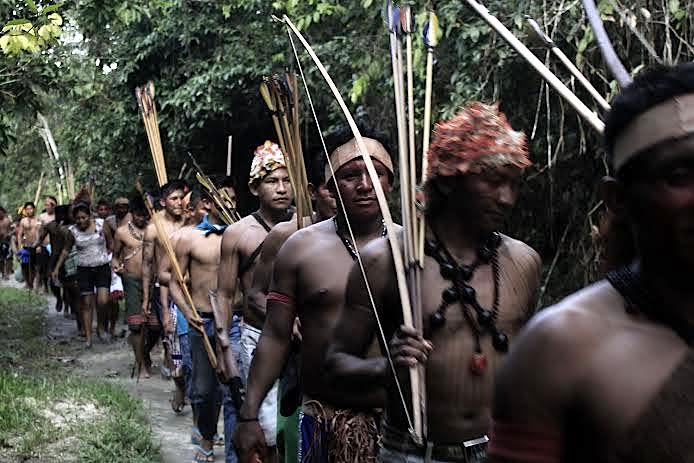
Brazil: Munduruku People Kick Miners Off Indigenous Territory, Seize Equipment

Trans­lat­ed from Por­tuguese by Thomas Walk­er / Earth First! Newswire

Trans­lat­ed from Por­tuguese by Thomas Walk­er / Earth First! Newswire

Threatened by Death, Muduruku Expel Miners from their territories, West of Para.

Under threat of death, Mudu­ruku expel min­ers from their ter­ri­to­ries, west of Para.

Night had hard­ly arrived when indige­nous Munduruku peo­ple land­ed on the bank of a mine on Tropas Riv­er, a trib­u­tary of Tapa­jós riv­er, in a region west of Pará.  From the five speed­boats, all of them full, came war­riors and chil­dren, all with one objec­tive: to dri­ve out ille­gal min­ers from Munduruku land.

Right at the entrance of the shed, the indige­nous encoun­tered two of the twelve min­ers present.  Paint­ed for war, the Munduruku held strong.

“You have ten min­utes to get out.  Get your things, go away, and don’t come back.  This is the land of the Munduruku,” ordered Paigo­muy­at­pu, chief of the war­riors, while the min­ers were pack­ing their bags and prepar­ing to aban­don the area.

Accord­ing to the work­ers in the mine, the four pairs of dredges, used for the extrac­tion of gold, belonged to Alexan­dre Mar­tins.

Known as Tubaí­na, Mar­tins is also own­er of at least two more mines in the region, and left the site three days before the oper­a­tion, exact­ly when the Munduruku start­ed the sur­vey in the Tapa­jós basin.

“He (Tubaí­na) said that he was going there to anoth­er of his posts. He isn’t there, and he isn’t here.  No one knows,” con­firmed Mara Almei­da, who cooked in the posts for the min­ers in Tubaí­na.  The action came after numer­ous com­plaints filed with gov­ern­ment agen­cies.  Ozi­mar Dace, Munduruku mem­ber of the move­ment and reporter of the oper­a­tion, said that the indige­nous have already tried to kick out the pari­wat (who are not indige­nous) by way of the Brazil­ian Envi­ron­men­tal Insti­tute (Iba­ma), Insti­tute Chico Mendes of Bio­di­ver­si­ty Con­ser­va­tion (ICM­Bio), and Nation­al Foun­da­tion of the Indige­nous (Funai).

“The peo­ple decid­ed that these author­i­ties would nev­er give results to us.  They are nev­er going to do this so that we can live in peace.  They gave the dead­line for when they would give results, but this nev­er hap­pened.  So, for these rea­sons, we decid­ed to resolve the issue by our own account.”

The ille­gal explo­ration of the mine inside the indige­nous land of the Munduruku is not new.  Accounts trace the start of these activ­i­ties to the 1980s.  One sto­ry of threats, agree­ments with a small group of lead­ers, and exploita­tion of indige­nous labor weave a web that does not ben­e­fit the major­i­ty of peo­ple.

Accord­ing to local com­mu­ni­ties, the min­ers have caused var­i­ous prob­lems in the indige­nous lands due to uncon­trolled exploita­tion.  Pol­lu­tion of the riv­er, lack of fish, mis­un­der­stand­ings, and threats are the main rea­sons cit­ed for the indige­nous actions.  For these rea­sons, the indige­nous were “expelling min­ers and tak­ing their machines,” explains Paigo­muy­at­pu, chief of the Munduruku war­riors.

“The min­ers already made too many dam­ages in our ter­ri­to­ry.  We are evict­ing prob­lems, sick­ness, and many oth­er things that are hap­pen­ing.  We are evict­ing this for our future gen­er­a­tion,” he added.

The sur­veil­lance start­ed on Jan­u­ary 15, last­ed almost twen­ty days, and passed through var­i­ous trib­u­taries of the Tapa­jós riv­er basin, such as Tropas riv­er, Kabu­ruá riv­er, Kadiriri riv­er, and Kabitu­tu riv­er.  In all, the Munduruku con­fis­cat­ed twelve dredges.  They will remain in the vil­lages for a month while the indige­nous decide what they will do.

“In rela­tion to the mines, they will stay put.  After a month pass­es and we decide what we are going to do with machines: if we are going to do projects to ben­e­fit the com­mu­ni­ties in the area where there are already machines.  But we need alter­na­tive projects to gen­er­ate funds for the com­mu­ni­ty, like fish farm­ing, flour pro­duc­tion, nut extrac­tion, copal and hon­ey.  We need the sup­port of FUNAI,” Paigo­muy­at­pu said.

Pressed by the Munduruku, the FUNAI sup­port­ed the autonomous action of the indige­nous, financ­ing fuel for the boats.

“It was one of their demands, it came from pres­sure.  They want­ed this to hap­pen in any form they could.  We think that tak­ing their own ini­tia­tive is even bet­ter, so that they can under­stand them­selves with their rel­a­tives and decide that they are not going to per­mit the entry of the min­ers any­more,” com­ment­ed Julian Arau­jo, from the coor­di­na­tion of the FUNAI of Itaitu­ba.

Accord­ing to Juliana, since she arrived in the region in 2010, FUNAI has received com­plaints from the Munduruku on ille­gal min­ing on indige­nous land.  In Octo­ber of last year, the com­plaints were reit­er­at­ed and for­ward­ed to ICM­Bio and the Fed­er­al Police.  In 2012, an oper­a­tion against the min­ers had only a pro­vi­sion­al effect because the min­ers returned.  Because of this, it was sug­gest­ed that FUNAI work towards aware­ness with­in the man­age plant.

“It’s not enough to just do the oper­a­tion and after­wards oth­er indige­nous peo­ple autho­rize the entrance of min­ers.  We resolved to take a lit­tle more care with this.  As much as ICM­Bio, we have per­son­al dif­fi­cul­ties.  There is one per­son that is respon­si­ble for a num­ber of units when we are mon­i­tor­ing [the area], so we will try call­ing vol­un­teers from oth­er places because the local vol­un­teers end up being tar­get­ed by the min­ers.”

The cli­mate is tense in the region.  Com­mu­ni­cat­ing by radio, the lead­ers dis­cov­ered that they are being fol­lowed.  There is a list with at least five names of indige­nous lead­ers marked for death.  The author of the threats could be Tubaí­na.  Accord­ing to a Munduruku, he com­mands a group of gun­men with auto­mat­ic weapons.

“Tubaí­na is feared in the region and walks with a rifle in his right hand through the vil­lage.  No one says any­thing.  I said, ‘Hey, inside indige­nous ter­ri­to­ry, only the Fed­er­al Police and FUNAI are autho­rized to be armed,’” Val­mar Kaba relat­ed.  Beyond the lead­ers, Tubaí­na has alleged­ly threat­ened the chief of the vil­lage sur­veil­lance sta­tion, Oswal­do Waro, and his son, Joao Waro.  In the last nine­teen days, the two closed the vil­lage airstrip with sticks and stones in order to make sure that the min­ers leave with the seized machines.

“Tubaí­na passed the radio to the chief and said that when Oswal­do went to work, in the Bananal, Tubaí­na would catch him and his kid,” said Leuza Kaba, an indige­nous woman.  One of the work­ers expelled by the Mundruku, known as Shorty, informed that the min­ers of Humai­ta and from 180 kilo­me­ters across the Trana­ma­zon­i­ca (Trans Ama­zon High­way) would be plan­ning to go to Tapa­jós and to “work things out” with the indige­nous peo­ple.  Shorty did not reveal his true name.  He is frank and soft-spo­ken.  At a bar table, Shorty said that he became a min­er 14 years ago, when his part­ner left him.

“I’ve only been here in the region for six years.  The peo­ple tell a lot of lies about the min­ers.  They talk a lot about Tubaí­na, but he is a good per­son and helps every­body,” he said.

He left say­ing that he is still going to return to get the gold from the indige­nous area.  Some acquain­tances said that Shorty got out of prison two months ago.  He was impris­oned for killing a man with a knife in a min­ing vil­lage near Caton, with­in the indige­nous area.

“And he killed anoth­er with a .20 bul­let, right here, on this road,” said one of his acquain­tances.  The reporter was not able to con­tact Tubaí­na.  On Fri­day, (Jan­u­ary 31, 2014), indige­nous lead­ers in the Jacarea­can­ga del­e­ga­tion reg­is­tered a police report denounc­ing the threats of the mine own­er and report­ed the sit­u­a­tion to fed­er­al pros­e­cu­tors.

Let­ter

In a let­ter, the indige­nous say they do not have fear of death and that they will con­tin­ue fight­ing for their rights.

Car­ta VI—Letter of the Munduruku Ipereg Ayu Move­ment

We, chiefs, lead­ers, and war­riors, came across to greet you, ladies and gentlemen—those who sup­port our move­ment Munduruku Ipereg Ayu.

We, war­riors, did our sur­veil­lance of our ter­ri­to­ry.  We took out and expelled the invad­ing min­ers from our ter­ri­to­ry and we seized their machines.  Now they are threat­en­ing us with death, but we are not intim­i­dat­ed.

This is the first step.  We are going to defend our ter­ri­to­ry, our riv­er, our for­est, our rich­es, and our peo­ple until the end.  This is our word. 

We fin­ish this let­ter with much peace and friend­ship.  Sawe! Sawe! Sawe! 

            Sin­cere­ly,

            Munduruku Apereg Ayu Move­ment

            Caro­cal Vil­lage, Tropas Riv­er,

            In the Munic­i­pal­i­ty of Jacarea­can­ga, West of Para.

Reclaim the Power gathering 8–9 February

After an incred­i­ble day of idea gen­er­a­tion and vision­ing at the last gath­er­ing, it’s time for con­crete pro­pos­als and deci­sions about our next steps.


Loca­tion: Oxford
Time: Sat­ur­day 8th Feb­ru­ary 11am ­­– Sun­day 9th 4pm

Address: TBC
Crash Space/Social: Pro­vid­ed. Fur­ther details TBC.
Meals: Pro­vid­ed, dona­tion cost TBC
Trav­el Pool: Avail­able. Please book trav­el tick­ets in advance so that this can sup­port the most peo­ple.
Notes from Man­ches­ter Vision­ing Day are here: http://bit.ly/1lQ0Yd3

In ear­ly Decem­ber a large num­ber of peo­ple came togeth­er to dis­cuss the rad­i­cal visions they had for the future – visions that Reclaim the Pow­er, as a net­work, could help bring about.

It was a very open day of dis­cus­sion with a clear struc­ture, but with no pre-planned agen­da. Every­thing we talked about was gen­er­at­ed by par­tic­i­pants, and a huge num­ber of dif­fer­ent ideas were placed on the table.

So what next? Well, the idea is that all of that dis­cus­sion feeds into a month of cre­ative pro­pos­al mak­ing before the next gath­er­ing. This will be a space for short and medi­um-term deci­sion mak­ing where we work out what we’re doing in the next few months – and how this fits in with long term visions.

Rough pro­pos­al area groups formed at the Decem­ber gath­er­ing, includ­ing:

1. How to chal­lenge cor­po­rate pow­er
2. Move­ment and diver­si­ty
3. Ener­gy and fos­sil fuels
4. Pos­i­tive solu­tions

If you would like to link up with these groups and input into pro­pos­als for next steps, just con­tact info@nodashforgas.org.uk and you will be put in touch with a group con­tact.

This said, all pro­pos­als are wel­come! If you’re work­ing on your own, out­side these groups, then great. The more ideas the bet­ter.

The pro­pos­al dead­line is the 31st Jan­u­ary 2014. Please try and fol­low this rough four point list when writ­ing them, as it is essen­tial that all the pro­pos­als be con­sid­ered on an equal foot­ing.

1. What is it?
2. How does it link to long-term strate­gic aims?
3. Time­line?
4. Resources need­ed? (inc, peo­ple, costs, skills)

Spe­cif­ic venue and agen­da details to fol­low soon. In the mean­while, please check http://bit.ly/1lQ0Yd3 to see the dis­cus­sions and out­comes of the last agen­da.

See you soon,

RTP Gath­er­ings Team

info@nodashforgas.org.uk